Fire Water Hydraulic Calculation Using PIPENET Training Course – Cairo, 31 May – 4 Jun 2027

Course Details
-
# 2237_263558
-
31 May – 4 June 2027 04.Jun.2027
-
Cairo
-
5200 €
This session: 31 May – 4 Jun 2027
This Fire Water Hydraulic Calculation Using PIPENET Training Course session in Cairo runs from Monday 31 May to Friday 4 June 2027 (week 22, Q2 2027). It is the only date in Cairo in 2027, at a fee of 5,200 €. Registration is open for this date. It is held in person.
- Dates
- Monday 31 May – Friday 4 Jun 2027
- Week
- 22 of 2027
- Duration
- 5 days
- Fee
- 5,200 €
- Status
- Open for registration
- Format
- In person
Overview
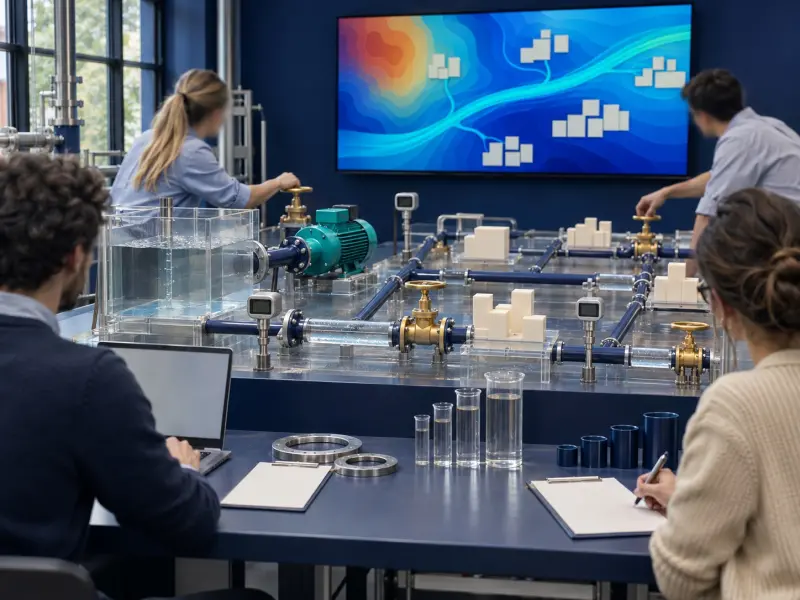
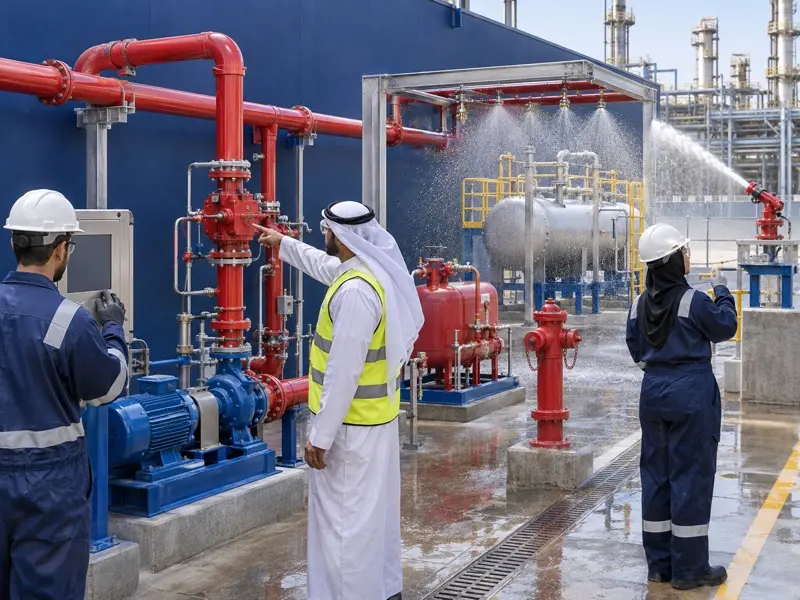
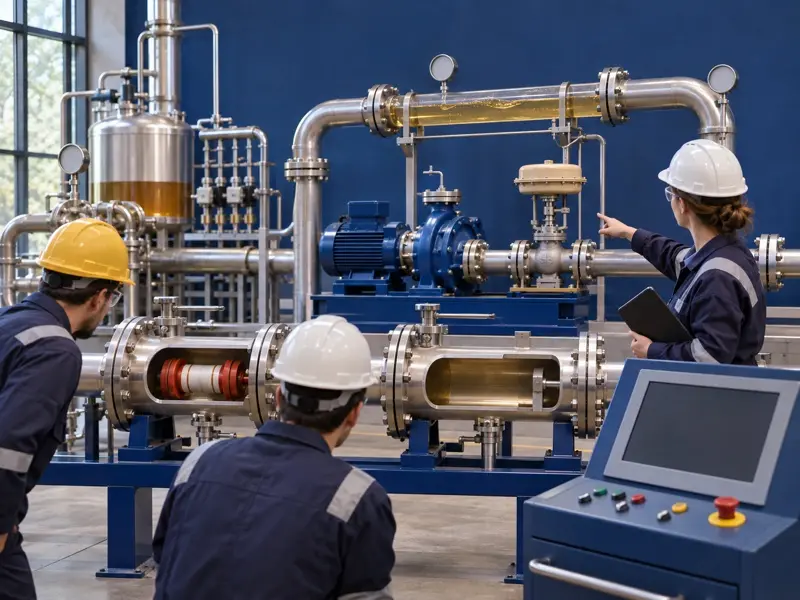
The Fire Water Hydraulic Calculation Using PIPENET Training Course is a one-week course for fire protection engineers, piping designers, and process safety professionals who require advanced computational modeling to design robust suppression networks and verify hydraulic compliance. Inadequate delivery pressures, unbalanced deluge coverage, and unmitigated surge pressures during rapid valve operations jeopardize asset safety and cause structural piping failures. This course resolves these challenges through systematic steady-state network sizing, spray nozzle distribution balancing, and transient water hammer analysis using industry-standard PIPENET software. Agile Leaders Training Center delivers the Fire Water Hydraulic Calculation Using PIPENET Training Course.
Who Should Attend
- Fire protection engineers responsible for designing active suppression systems and calculating network demand curves.
- Piping design engineers tasked with sizing fire water ring mains, branch lines, and deluge distribution manifolds.
- Process safety and loss prevention specialists auditing facility firefighting adequacy against international safety codes.
- Plant maintenance and utility engineers managing industrial fire pump performance, isolation valves, and distribution integrity.
- EPC technical consultants developing hydraulic calculation reports and equipment datasheets for high-hazard installations.
The course assumes participants actively work with basic fluid mechanics and industrial piping layouts, and it leaves out entry-level drafting commands and general plant firefighting tactics.
Departments and Industries
The course draws operational cases from process engineering, industrial safety, and heavy infrastructure sectors.
- Petrochemical processing plants and oil refining complexes
- Offshore production platforms and liquefied gas marine terminals
- Thermal and combined-cycle power generation stations
- Chemical manufacturing and hazardous bulk storage facilities
- Heavy industrial manufacturing and mining processing plants
Learning Objectives
By the end of this course, participants will be able to:
- Apply NFPA 15 and NFPA 13 density criteria to calibrate PIPENET fire suppression models.
- Build loop ring main models to assess flow velocities and critical pressure drops.
- Analyze deluge nozzle K-factors and discharge patterns across complex equipment geometries.
- Diagnose transient water hammer spikes resulting from rapid valve closures and pump trips.
- Evaluate pump performance curves against worst-case fire water demand envelopes.
- Prioritize pipe diameter adjustments and orifice sizing to balance branch line pressures.
Course Agenda
Day 1: Fire Water Hydraulics and Design Standards
- NFPA 13, NFPA 15, and NFPA 20 active fire protection hydraulic design requirements
- Hazen-Williams and Darcy-Weisbach friction loss formulations in fire piping
- Static pressure, residual pressure, and velocity limit calculations in distribution mains
- PIPENET user interface navigation, component libraries, and unit configuration setup
- Design basis documentation: establishing fire water demand, hazard densities, and coverage areas
Day 2: Steady-State Modeling of Fire Water Ring Mains
- Closed-loop fire water grid modeling using the PIPENET Standard module
- Fire water pump curve integration and multi-pump parallel operation modeling
- Sectional isolation valve modeling to simulate ring main rupture and maintenance cases
- Critical path hydraulic gradient analysis and velocity profiling across looped headers
- Model error debugging, convergence troubleshooting, and connectivity verification
Day 3: Deluge and Spray System Hydraulic Design
- Fixed water spray system modeling using the PIPENET Spray/Sprinkler module
- Deluge valve, strainer, and pressure control valve hydraulic loss characterization
- Nozzle selection, K-factor assignment, and spray angle coverage optimization
- Hydraulic balancing of unbalanced grid piping using restriction orifices
- Foam-water deluge and monitor network modeling for process unit protection
Day 4: Transient Analysis and Surge Suppression
- Transient hydraulic principles and water hammer fundamentals in fire water networks
- PIPENET Transient module setup: wave speed calculation and boundary condition definition
- Rapid fire pump start-up, power failure, and valve closure scenario simulations
- Air release valves, surge vessels, and pressure relief valve sizing and placement
- Pipeline stress mitigation through transient pressure peak and cavitation vapor pocket analysis
Day 5: Hydraulic Verification Simulation and Optimization
- Exercise: model a looped refinery fire water main under sectional isolation constraints
- Exercise: balance a process area water spray deluge system using calibrated orifice plates
- Exercise: evaluate transient pressure surges during sudden fire water pump trips
- Exercise: audit a tank farm foam-water monitor system against hydraulic discharge standards
- Capstone exercise: complete a fully integrated PIPENET fire water hydraulic calculation dossier
Practical Exercises
The course uses industrial layout drawings, fire water pump curves, and manufacturer nozzle specification sheets.
- Suggested activity: Model a looped industrial fire water ring main to identify hydraulic bottlenecks during isolated main breaches.
- Suggested activity: Size balancing orifice plates in a deluge system model to achieve uniform nozzle discharge pressures.
- Suggested activity: Simulate rapid valve closure transients in PIPENET to specify air valve and surge vessel requirements.
FAQs
Who suits the Fire Water Hydraulic Calculation Using PIPENET Training Course?
The Fire Water Hydraulic Calculation Using PIPENET Training Course suits fire protection engineers, piping designers, and safety specialists. The course assumes working knowledge of fluid mechanics and fire protection principles, leaving out entry-level drafting routines and manual firefighting tactics.
How does this course differ from general municipal water distribution modeling courses?
General municipal water modeling focuses on diurnal municipal consumption and long-term storage turnover. This course focuses on high-pressure fire suppression demands, deluge spray hydraulics, NFPA code compliance, and transient surge phenomena within industrial fire protection networks using PIPENET.
What calculation methods does PIPENET use for fire water hydraulics?
PIPENET applies the Hazen-Williams and Darcy-Weisbach equations for steady-state pressure drop calculations across pipes, fittings, and nozzles. For surge analysis, the software uses the Method of Characteristics to solve transient flow equations and predict peak shock pressures.
Why is transient hydraulic calculation critical in fire water network design?
Fast-acting deluge valves and sudden pump trips generate pressure surges that exceed pipe ratings or induce vacuum collapse. Transient modeling in PIPENET pinpoints cavitation pockets and surge spikes, allowing engineers to position surge vessels and air valves accurately before procurement.
Conclusion
Participants return to their organizations equipped with an integrated PIPENET fire water hydraulic calculation dossier and validation checklist. This standardized engineering package enables technical teams to verify deluge flow demands, balance pipe pressures, and eliminate water hammer risks across critical facility assets. Fire safety engineers immediately use these models to secure design approvals and optimize active fire suppression infrastructure.
Maintenance Training and Engineering Training Courses
Fire Water Hydraulic Calculation Course Using PIPENET (2237_263558)
Course Details
# 2237_263558
31 May – 4 June 2027
Cairo
Fees : 5200 €
Fire Water Hydraulic Calculation Using PIPENET Training Course runs in Cairo over 5 days, with 1 upcoming date in Cairo. The course fee is 5,200 €.
All dates in Cairo
| Dates | Price | Actions |
|---|---|---|
| 31 May – 4 June 2027 This session | 5,200 € | Register |
Training in Cairo
Join us in the historic city of Cairo, Egypt, and enrich your knowledge with our industry-leading training courses.
All courses in CairoThis course in other cities
- Abu Dhabi
- Accra
- Addis Ababa
- Amman
- Amsterdam
- Athens
- Baku
- Bali
- Bangkok
- Barcelona
- Berlin
- Cape town
- Casablanca
- Chicago
- Doha
- Dubai
- Frankfurt
- Geneva
- Istanbul
- Jakarta
- Johannesburg
- Kuala Lumpur
- Kuwait
- Lagos
- Langkawi
- Lisbon
- London
- Madrid
- Manama
- Marbella
- Milan
- Montreux
- Munich
- Muscat
- Nairobi
- New York
- Nice
- Paris
- Phuket
- Porto
- Prague
- Rome
- San Diego
- Seoul
- Sharm El-Sheikh
- Singapore
- Tashkent
- Tbilisi
- Tokyo
- Toronto
- Trabzon
- Vienna
- Zanzibar
- Zoom