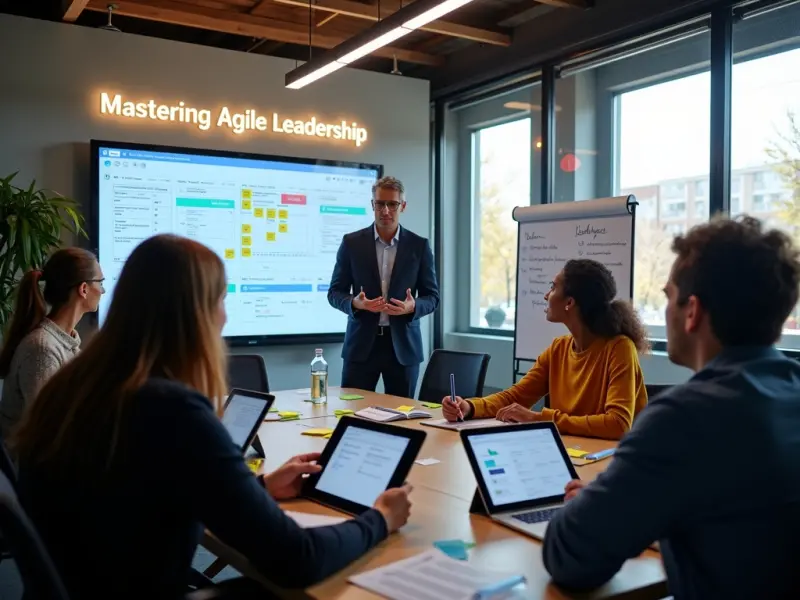
Adaptive Leadership and Agile Management Training Certification Course (2 Weeks)

Course Details
-
# 103600361_36284
-
14 – 25 June 2027 25.Jun.2027
-
Dubai
-
8500 €
Overview
The adaptive leadership and agile management training certification course equips professionals with practical capabilities to steer organizations through volatility, ambiguity, and complex operational transformations. Participants explore the balance between systemic diagnosis and iterative execution, examining how modern leadership styles foster psychological safety and team autonomy. The curriculum reviews methods for resolving non-linear business challenges, orchestrating cross-functional collaboration, and applying agile delivery practices to strategic initiatives. This course is delivered by Agile Leaders Training Center.
Who Should Attend
- Department managers and operational supervisors seeking to elevate their responsiveness to change.
- Team leaders guiding workgroups through organizational transitions and agile workflows.
- Project managers and programme coordinators shifting toward iterative delivery models.
- Functional heads responsible for aligning departmental performance with organizational goals.
- Professionals preparing for senior operational and strategic leadership roles.
Departments and Industries
This program supports professionals directing change initiatives across diverse operational environments.
- Executive Leadership and Strategic Planning Offices
- Project Management Offices and Operations Units
- Information Technology, Engineering, and Digital Services
- Human Resources, Talent Development, and Change Management
- Finance, Banking, Consulting, and Professional Services
- Healthcare, Pharmaceuticals, and Industrial Manufacturing
Learning Objectives
By the end of this course, participants will be able to:
- Distinguish between technical problems and complex adaptive challenges across business units.
- Deploy situational and transformational leadership styles aligned with operational demands.
- Establish agile communication frameworks that foster transparency across matrixed teams.
- Implement agile project management principles using iterative sprints, backlogs, and metrics.
- Create psychologically safe environments that support disciplined experimentation and coaching.
- Formulate an enterprise agility roadmap linking strategy, portfolio oversight, and cross-functional delivery.
Course Agenda
Day 1: Foundations of Adaptive Leadership
- Introduction to Adaptive Leadership Principles
- The Case for Adaptive Change in Modern Business Environments
- Distinguishing Technical vs Adaptive Challenges
- Traits and Behaviors of Adaptive Leaders
- Diagnosing the System: Organizational Pain Points
- Identifying and Mobilizing Key Stakeholders
- Reflection and Review: Understanding Your Role as a Change Leader
Day 2: Leadership Styles and Strategic Influence
- Overview of Leadership Theories and Operational Approaches
- Strategic Leadership Contrasted with Operational Administration
- Transformational Leadership Techniques and Visionary Alignment
- Adaptive vs Directive Decision-Making Models
- Building Credibility and Leading with Strategic Vision
- Emotional Intelligence in Leadership Practice
- Reflection and Review: Self-Assessment on Leadership Impact
Day 3: Communication and Influence in Agile Environments
- Agile Communication Principles and Team Collaboration Frameworks
- Verbal and Nonverbal Communication Mastery for Leaders
- Stakeholder Mapping, Engagement, and Expectation Management
- Feedback Culture: Establishing Constructive Input Protocols
- Influence Without Authority in Matrixed Teams
- Agile Communication Protocols in Remote and Hybrid Teams
- Reflection and Review: Communication Style Inventory and Debrief
Day 4: Situational and Team Leadership
- Situational Leadership Models and Style Flexibility
- Leading Diverse, Cross-Functional, and Multi-Disciplinary Teams
- Trust-Building Frameworks and Psychological Safety Foundations
- Targeted Empowerment and Responsible Delegation Tactics
- Managing Group Dynamics in High-Stakes Projects
- Coaching Conversations for Capability Development
- Reflection and Review: Leadership Simulation and Peer Review
Day 5: Change Management and Organizational Agility
- The Science of Change: Structural Models and Frameworks
- Communicating Change Initiatives for Transparency and Alignment
- Organizational Agility and Lean Enterprise Thinking
- Leading Teams Through Resistance and Uncertainty
- Agile Transformation Roadmaps and Implementation Pitfalls
- Aligning Organizational Culture with Strategic Change Goals
- Reflection and Review: Mapping Organizational Agility Readiness
Day 6: Agile Project and Performance Management
- Core Agile Frameworks: Scrum, Kanban, and Lean Practices
- Backlog Management, Sprints, and Iterative Delivery Planning
- Agile Roles and Responsibilities across Delivery Teams
- Metrics, Burn-Down Indicators, and Delivery KPIs
- Scaling Agile Workflows Across Multi-Functional Business Units
- Adaptive Approaches to Project Risk Management
- Reflection and Review: Practical Sprint Planning Exercise
Day 7: Innovation, Experimentation, and Agile Coaching
- Fostering an Innovation Culture within Delivery Teams
- Creating Safe-to-Fail Environments for Controlled Experimentation
- Design Thinking Principles Integrated with Agile Delivery
- Experimentation Cycles, Prototyping, and Hypothesis Testing
- Feedback Loops, Continuous Improvement, and Innovation Metrics
- Principles of Agile Coaching and Mentoring Ethics
- Reflection and Review: Team Innovation Sprint Challenge
Day 8: Leadership Development, Ethics, and Integrity
- Coaching for High Performance and Shared Accountability
- Assessing Organizational Agile Maturity Levels
- Leadership Development Planning and Structured Mentorship
- Ethical Leadership in Ambiguous and Shifting Environments
- Governance, Integrity, and Ethical Accountability in Agile Work
- Trust, Transparency, and Values-Based Leadership Practices
- Reflection and Review: Personal Coaching and Ethics Plan
Day 9: Business Agility and Global Leadership
- Business Agility vs Agile Delivery: Strategic Operational Alignment
- Creating Cross-Functional Agility Across Integrated Departments
- Customer-Centric Operating Models in Agile Enterprises
- Strategic Portfolio Management for Enterprise Agility
- Global Leadership Mindset for Multi-Cultural Workforces
- Inclusion, Diversity, and Cross-Cultural Communication Models
- Reflection and Review: Global Leadership Scenario Simulation
Day 10: Strategic Leadership Journey and Certification Project
- Capstone Presentations: Practical Agile Leadership Projects
- Peer Feedback Exchange and Facilitator Evaluations
- Reflective Practice: Leadership Growth Journaling and Review
- Post-Course Action Planning and Workplace Application Roadmaps
- Emerging Operational Trends: Automation, Technology, and Agile Evolution
- Certification Review and Enterprise Agility Action Steps
- Reflection and Review: Commitment to Sustainable Change
Practical Exercises
- Diagnostic exercise: Classify departmental bottlenecks into technical and adaptive challenges.
- Simulation exercise: Practice feedback delivery during a high-stakes project pivot.
- Agile planning exercise: Formulate an iterative delivery backlog with prioritization criteria.
- Strategy workshop: Draft a cross-functional business agility roadmap with defined milestones.
Frequently Asked Questions
What specific qualifications or prerequisites are needed for participants before enrolling in the course?
This course is open to professionals from all industries who hold, or are preparing for, leadership and management responsibilities. No prior credentials in agile or leadership frameworks are required, though practical exposure to team coordination or project environments is beneficial. The program accommodates both emerging managers and experienced leaders seeking to strengthen their capabilities.
How long is each day session, and is there a total number of hours required for the entire course?
Each training day contains four to five hours of interactive instruction, case review, and practical exercises. Across the two-week curriculum, participants complete between 40 and 45 total hours of structured learning and application.
How is adaptive leadership different from traditional leadership styles, and why is it essential in agile environments?
Traditional leadership relies primarily on established hierarchies suited for predictable, repeatable operations. Adaptive leadership enables managers to diagnose systemic challenges, guide teams through ambiguity, and test solutions iteratively. In agile settings, this mindset empowers teams to self-organize, navigate uncertainty, and sustain operational momentum.
Conclusion
This program provides managers with the structural knowledge and behavioral tools needed to lead through uncertainty. By unifying adaptive leadership principles with disciplined agile practices, participants gain the capability to mobilize teams, align strategic goals, and build enduring organizational resilience.
Leadership and Management Training Courses
Adaptive Leadership and Agile Management Training Course (103600361_36284)
Course Details
# 103600361_36284
14 – 25 June 2027
Dubai
Fees : 8500 €