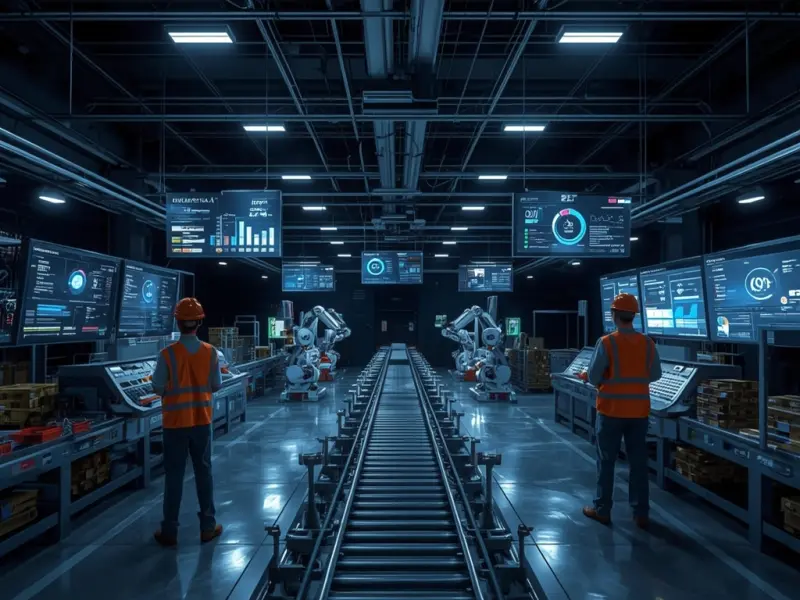
Operations Strategy: Workflow Design and Process Innovation

Course Details
-
# 103600410_102543
-
10 – 21 October 2027 21.Oct.2027
-
Bali
-
10000 €
Overview
Organizational performance hinges on how effectively core workflows adapt to market volatility and technical disruption. This intensive 2-week Strategic Operations Management: Process Innovation program provides practical methods for workflow redesign, business process reengineering, value stream mapping, and lean production systems. Participants evaluate diagnostic tools to eliminate throughput bottlenecks, balance resource loads, and accelerate turnaround cycles across industrial and service settings. Rather than addressing purely mechanical engineering or brief supervisory tactics, this course offers an end-to-end framework for establishing adaptive, customer-centric execution ecosystems. This course is delivered by Agile Leaders Training Center.
Who Should Attend
- Operations directors seeking to modernize multi-site workflow architectures and enhance cross-functional velocity.
- Continuous improvement heads and Lean champions leading business process reengineering programs.
- Plant administrators and facility heads aiming to balance capacity constraints and eliminate line stoppages.
- Process innovation consultants evaluating organizational handoffs and cycle-time compression.
- Quality assurance coordinators implementing structured variation control frameworks.
- General managers overseeing throughput optimization, resource allocation, and shop-floor modernization.
Departments and Industries
This program is designed for functional leaders and cross-disciplinary professionals across diverse operational settings.
- Process Engineering and Continuous Improvement in Discrete Manufacturing
- Workflow Modernization and Patient Flow Units in Healthcare Systems
- Fulfillment Operations and Warehouse Logistics in Retail Distribution
- Client Service Architecture and Back-Office Processing in Financial Institutions
- Infrastructure Maintenance and Resource Dispatch in Utility Services
- Assembly and Conversion Facilities in Industrial Equipment Manufacturing
Learning Objectives
By the end of this course, participants will be able to:
- Translate organizational strategy into responsive floor-level workflow architectures.
- Execute business process reengineering projects to eliminate systemic friction and administrative overhead.
- Deploy value stream mapping to identify waste, bottlenecks, and excessive cycle times.
- Implement lean production systems to maintain continuous flow and pull-based replenishment.
- Apply Six Sigma DMAIC protocols to eliminate process variance and defect patterns.
- Calculate rough-cut capacity requirements and balance line loading against fluctuating demand.
- Formulate visual controls and 5S standards to sustain workplace discipline.
- Direct cross-functional change programs that overcome employee resistance to workflow innovations.
Course Agenda
Day 1: Strategic Alignment and Operating Architecture
- Bridging executive strategic intent with front-line execution architecture
- Trade-offs among operational velocity, total unit cost, output quality, and service agility
- Order-qualifying versus order-winning criteria in modern process ecosystems
- Functional alignment audits across procurement, assembly, and customer fulfilment
- Mapping core processes against strategic competitive priorities
- Application Clinic: Formulating an operating architecture matrix
Day 2: Business Process Reengineering and Workflow Design
- Core tenets of business process reengineering and radical workflow restructuring
- Deconstructing transactional handoffs, functional silos, and approval bottlenecks
- Service blueprinting and customer journey mapping for administrative processes
- Establishing process boundaries, baseline cycle times, and resource loading ratios
- Human factors and ergonomic considerations in process re-architecture
- Application Clinic: Redesigning a fractured order-to-delivery workflow
Day 3: Lean Production Systems and Waste Eradication
- Foundations of the Toyota Production System and lean production systems
- The eight classical forms of waste across physical and digital workflows
- Continuous flow architecture versus batch-and-queue processing economics
- Standardized work instructions as the baseline for incremental Kaizen iterations
- Visual control mechanisms, Andon signaling, and error-proofing (Poka-Yoke) mechanics
- Application Clinic: Conducting a workplace waste diagnostic audit
Day 4: Value Stream Mapping and Bottleneck Resolution
- Value stream mapping notation standards and data collection guidelines
- Drafting current-state maps with process lead times, changeovers, and queue levels
- Isolating pacemaker processes, non-value-adding steps, and constraint stages
- Applying the Theory of Constraints to maximize bottleneck throughput
- Envisioning future-state maps that incorporate pull loops and continuous movement
- Application Clinic: Developing a comprehensive future-state value stream map
Day 5: Six Sigma Quality and Process Variation Control
- Statistical process control foundations and natural versus assignable variation
- The DMAIC problem-solving cycle: Define, Measure, Analyze, Improve, Control
- Root-cause diagnostic tools: Ishikawa diagrams, Pareto stratification, and 5-Why analysis
- Process capability measurement utilizing Cp and Cpk performance indices
- Total Productive Maintenance (TPM) pillars to minimize unplanned downtime
- Application Clinic: Diagnosing chronic defect rates using DMAIC tools
Day 6: Capacity Planning and Throughput Balancing
- Rough-cut capacity modeling and aggregate resource allocation
- Takt time calculations, line balancing, and operator work element distribution
- Managing demand seasonality and temporary volume surges without cost inflation
- Heijunka techniques for leveling production volume and product mix
- Managing setup times using Single-Minute Exchange of Die (SMED) methods
- Application Clinic: Balancing assembly line workloads against fluctuating takt times
Day 7: Work-in-Progress Control and Replenishment Systems
- Calculating economic order quantities and continuous buffer safety stocks
- Implementing Kanban signaling protocols for internal work-in-progress control
- Point-of-use material presentation and kitting systems to minimize transit waste
- Vendor-managed replenishment and two-bin storage setups on the shop floor
- Stockholding cost analysis, carrying penalties, and dead-inventory containment
- Application Clinic: Sizing a visual pull replenishment loop
Day 8: Digital Systems and Automation Integration
- Assessing workflow readiness prior to automated system deployments
- Integrating enterprise software with shop-floor visual tracking tools
- Data-driven maintenance scheduling leveraging Internet of Things sensors
- Robotic process automation applications for administrative workflows
- Mitigating technology adoption failure risks through staged prototyping
- Application Clinic: Drafting an automation feasibility assessment charter
Day 9: Organizational Change and Front-Line Culture
- Psychological drivers of workforce resistance during workflow changes
- Leadership behaviors that promote front-line problem-solving and Kaizen ownership
- Structuring cross-departmental Kaizen events and rapid-improvement blitzes
- Designing incentive structures that reward process discipline and quality containment
- Sustaining 5S workplace order through structured visual inspection audits
- Application Clinic: Formulating an organizational change road-map
Day 10: Process Innovation Roadmap and Capstone
- Constructing multi-year process innovation deployment plans
- Establishing balanced process health scorecards and operational metrics
- Resource allocation governance for competing continuous improvement initiatives
- Horizontal scaling of localized workflow breakthroughs across business units
- Final capstone simulation: Pitching a business process reengineering transformation
- Application Clinic: Consolidating individual program takeaways into action plans
Practical Exercises
Participants build practical capabilities through applied simulations and diagnostic exercises throughout the 2 weeks.
- Construct an end-to-end current-state value stream map to locate lead-time delays and hidden bottlenecks.
- Apply the SMED methodology to cut setup turnaround duration in an industrial case scenario.
- Design a Kanban visual signaling protocol to regulate buffer reserves between two process steps.
- Formulate a business process reengineering charter targeting administrative cycle-time compression.
FAQs
How does this 2-week course differ from shorter supervisory programs?
This 2-week curriculum provides deep methodological coverage of structural transformation, business process reengineering, and Six Sigma integration. Shorter one-week sessions often concentrate exclusively on immediate supervisor routines, whereas this course builds the analytical capability needed to lead enterprise-wide workflow restructuring.
Is this program suitable for participants from service and non-manufacturing industries?
Yes. The methodologies taught, including value stream mapping, waste elimination, bottleneck management, and business process reengineering, apply directly to administrative transactions, healthcare delivery, financial processing, and digital client fulfillment.
What mathematical or statistical expertise is required to follow the Six Sigma modules?
Only basic arithmetic and practical workplace logic are required. The statistical process control and capacity planning modules focus on practical application, straightforward formula execution, and data-backed decision-making rather than theoretical mathematics.
Conclusion
Sustainable competitive strength requires disciplined workflows that remove waste, balance capacity, and respond smoothly to customer requirements. By mastering workflow redesign, business process reengineering, value stream mapping, and lean production systems, participants return ready to lead transformation initiatives that compress cycle times, elevate quality, and unlock sustained organizational performance.
Quality and Operations Management Training Courses
Strategic Operations Management and Process Innovation (103600410_102543)
Course Details
# 103600410_102543
10 – 21 October 2027
Bali
Fees : 10000 €
Operations Strategy: Workflow Design and Process Innovation runs in Bali over 12 days, with 1 upcoming date in Bali. The course fee is 10,000 €.
All dates in Bali
| Dates | Price | Actions |
|---|---|---|
| 10 – 21 October 2027 | 10,000 € | Register |
Training in Bali
Sunset view over rice terraces in Bali with palm trees and mountains in the background, showcasing natural island beauty.
All courses in BaliThis course in other cities
- Abu Dhabi
- Accra
- Amman
- Amsterdam
- Athens
- Baku
- Bangkok
- Barcelona
- Berlin
- Cairo
- Cape town
- Casablanca
- Chicago
- Doha
- Dubai
- Frankfurt
- Geneva
- Istanbul
- Jakarta
- Johannesburg
- Kuala Lumpur
- Kuwait
- Langkawi
- Lisbon
- London
- Madrid
- Manama
- Marbella
- Milan
- Montreux
- Munich
- Muscat
- Nairobi
- New York
- Nice
- Paris
- Phuket
- Porto
- Prague
- Rome
- San Diego
- Seoul
- Sharm El-Sheikh
- Singapore
- Tashkent
- Tbilisi
- Tokyo
- Toronto
- Trabzon
- Vienna
- Zanzibar
- Zoom